


The digital marketing world is undergoing a seismic shift. How SEO is affected by AI is no longer a theoretical question it is the defining challenge and opportunity for every website owner, content creator, and marketing agency in 2025 and 2026. From the way Google processes search queries to how users interact with results pages, artificial intelligence has infiltrated every layer of Search Engine Optimization (SEO), making it simultaneously more complex and more powerful than ever before.
When Google first introduced RankBrain in 2015, most SEO professionals barely blinked. Fast-forward to today, and AI is not just one of 200 ranking signals, it is the engine running the entire search ecosystem. Google’s AI Overviews, formerly known as Search Generative Experience (SGE), now dominate the top of search results pages, directly answering user queries and fundamentally changing click-through behavior across every niche and industry. In this comprehensive guide, we break down exactly how AI affects SEO, what changes Google’s algorithms have undergone, how to future-proof your content strategy, and what tools and tactics leading agencies like my DevIT Solutions are deploying to help businesses stay competitive in an AI-first search environment.
1. How SEO Is Affected By AI — The Revolution Inside Google Search
To understand how AI affects SEO, we must first examine how Google uses AI within its search engine. Google is no longer just a keyword-matching machine. It is a sophisticated AI system that understands context, intent, relationships between concepts, and even the credibility of sources.
Google uses multiple layers of AI technology simultaneously. RankBrain interprets ambiguous queries. BERT (Bidirectional Encoder Representations from Transformers) understands the nuance of language. MUM (Multitask Unified Model) processes text, images, and video simultaneously. And Gemini, Google’s most advanced AI model, now powers the Search Generative Experience, delivering conversational AI answers directly on the SERP.
This multi-layered AI infrastructure means that old-school SEO tactics keyword stuffing, thin content pages, low-quality backlinks are not just ineffective. They actively trigger algorithmic penalties. Modern SEO demands a deep understanding of what AI rewards: genuine expertise, user-first content, semantic relevance, and trustworthy sources.
AI-Driven SEO vs Traditional SEO — Key Differences
| Factor | Traditional SEO | AI-Driven SEO |
| Keyword Research | Manual, time-intensive | Automated, predictive |
| Content Creation | Fully human-written | AI-assisted / AI-generated |
| Link Building | Outreach & relationship-based | AI identifies opportunities |
| Ranking Signals | ~200 known factors | AI interprets intent & context |
| Algorithm Updates | Periodic (Panda, Penguin) | Continuous machine learning |
| User Intent Analysis | Keyword match-based | Semantic & behavioral analysis |
| Technical Audits | Manual crawls | AI-automated site auditing |
| Competitor Analysis | Spreadsheet-driven | Real-time AI insights |
2. Google’s AI Algorithm Timeline: From RankBrain to Gemini
Understanding the timeline of Google’s AI algorithm evolution is critical for any SEO professional. Each major update fundamentally shifted what it takes to rank, and the pace of change has only accelerated.
RankBrain (2015) was Google’s first foray into machine learning for search. It helped Google interpret novel queries it had never seen before a major leap from pure keyword-matching. BERT (2019) changed everything again by enabling Google to understand the relationship between words in a query, not just individual words. A search like “can you get medicine for someone at the pharmacy” finally got contextually accurate results rather than keyword-matched ones.
MUM (2021) was 1,000 times more powerful than BERT and capable of understanding 75 languages, images, and video simultaneously. Then came the Helpful Content Update (2022), which directly targeted low-quality, AI-generated content that provided no real value. Google sent a clear message: websites that use AI-generated content solely to manipulate rankings will face penalties, while websites that create helpful, people-first content will earn better visibility.
By 2024-2025, AI Overviews had rolled out globally, placing AI-generated summaries at the very top of search results above traditional blue links. This single change has had massive implications for click-through rates, traffic, and the entire economics of organic search. Studies from early 2025 show that AI Overviews appear in roughly 47% of all Google search queries in the US.
Google AI Algorithm & Update Timeline (2015–2026)
| Year | Google Algorithm / AI Update | Key SEO Impact |
| 2015 | RankBrain | First AI ranking signal; improved query understanding |
| 2019 | BERT | Natural language processing; rewarded conversational content |
| 2021 | MUM (Multitask Unified Model) | Multimodal search; 1000x more powerful than BERT |
| 2022 | Helpful Content Update | Penalized AI-generated, unhelpful, thin content |
| 2023 | SGE (Search Generative Experience) | AI-generated answers at top of SERP; reduced clicks |
| 2024 | AI Overviews (Full Rollout) | AI summaries dominate Position Zero |
| 2025 | Gemini Integration in Search | Conversational AI search; intent-first indexing |
| 2026 | Continuous AI Ranking Signals | Real-time personalization; E-E-A-T weighted heavily |
3. How SEO Is Affected By AI — The 7 Core Impact Areas
3.1 How SEO Is Affected By AI in Keyword Research — From Keywords to Intent
Traditional keyword research focused on search volume and competition. How AI affects SEO in keyword research is profound: AI tools like Google’s own systems now understand the intent behind a query informational, navigational, transactional, or commercial. SEOs must cluster keywords by semantic meaning and user journey stage, not just monthly search volume. Tools powered by AI, such as SEMrush’s Keyword Magic Tool and Ahrefs’ AI-enhanced suggestions, now provide intent classifications automatically.
3.2 How AI Affects SEO Content Quality — Topical Authority Over Thin Pages
The era of publishing 50 thin blog posts a month to capture traffic is over. Google’s Helpful Content System uses a site-wide machine learning classifier to determine whether a website creates content primarily for users or primarily to influence search rankings. What is Topical Authority in SEO has become one of the most critical concepts — Google rewards websites that demonstrate deep, comprehensive expertise on a specific subject area over time. A website that covers a topic thoroughly, with interconnected content, strong author credentials, and consistent updates, is far more likely to rank than one with isolated, shallow articles.
3.3 What Is SEO for AI Called? AI Overviews, GEO & Zero-Click Search
AI Overviews (previously SGE) now appear at the top of Google results for a wide range of queries, providing immediate answers without users needing to click through to a website. This phenomenon, known as “zero-click search,” is drastically reducing organic traffic for informational queries. Data from BrightEdge (2025) indicates that pages cited inside AI Overviews receive higher brand visibility but lower direct click volume compared to traditional Position 1 rankings.
To appear inside AI Overviews, content must be exceptionally authoritative, well-structured, and directly answer specific questions. This is pushing SEOs toward creating AI First Websites websites architected with clear structure, schema markup, factual accuracy, and deep topical coverage so AI systems can easily extract and cite their content.
3.4 How AI Affects SEO Trust Signals — E-E-A-T Has Never Mattered More
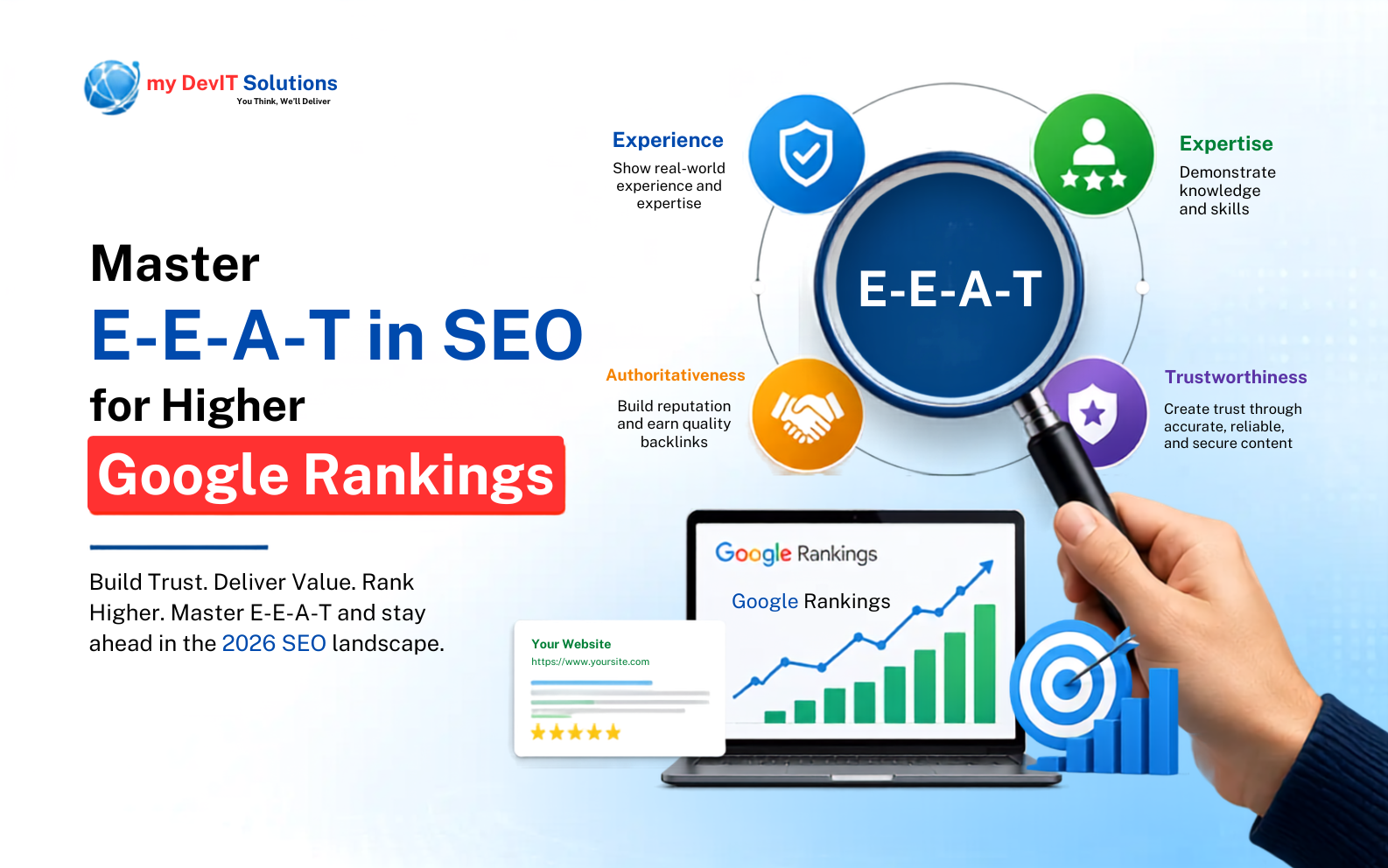
Google’s Search Quality Rater Guidelines emphasize E-E-A-T Experience, Expertise, Authoritativeness, and Trustworthiness. In an era when AI can generate convincing-sounding content on any topic, Google has doubled down on signals that demonstrate genuine human experience and expertise. Author bio pages with verifiable credentials, first-hand case studies, original research, and transparent sourcing have become critical differentiators.
E-E-A-T Framework — How AI Has Transformed Each Factor
| E-E-A-T Factor | What Google Evaluates | How AI Has Changed It |
| Experience | First-hand knowledge of topic | AI content lacks real experience; humans must add it |
| Expertise | Subject-matter knowledge depth | AI can mimic expertise; verifiable credentials matter more |
| Authoritativeness | Brand & author reputation signals | Backlink quality + AI entity recognition |
| Trustworthiness | Accuracy, transparency, security | AI misinformation risks raise trust bar significantly |
3.5 Future of SEO With AI — Technical SEO Gets Automated
AI has transformed technical SEO from a reactive, manual process to a proactive, automated one. Modern AI-powered SEO tools can crawl an entire website, identify hundreds of technical issues, prioritize them by impact, and in some cases automatically implement fixes. AI systems now handle many technical SEO tasks, including page speed optimization, Core Web Vitals monitoring, structured data implementation, and internal link optimization.
3.6 How AI Affects SEO Link Building — Quality Beats Quantity
Backlinks remain a critical Google ranking factor, but AI now plays a significant role in evaluating link quality and identifying natural link-building opportunities. Google’s AI systems can now better detect link schemes, PBNs (Private Blog Networks), and unnatural link patterns. At the same time, AI tools can identify high-authority link opportunities, analyze competitor backlink profiles, and even assist with personalized outreach emails. Quality over quantity has never been more literal in link building.
3.7 Future of SEO With AI — Voice Search and Conversational Queries
With the rise of voice assistants and conversational AI interfaces, including tools people Using ChatGPT Everyday for search-like queries, the nature of search queries itself is evolving. Voice searches are longer, more conversational, and question-based. SEOs must optimize content for natural language patterns, FAQ structures, and featured snippet formats to capture this growing segment of search traffic.
4. Future of SEO With AI — What to Expect in 2025-2026
The future of SEO with AI is not about replacing human creativity and strategy it is about augmenting them. Here are the trends that will define SEO in the next 12 to 24 months:
Personalized Search at Scale: AI will enable Google to deliver increasingly personalized results based on individual user behavior, location, device, and past interactions. One-size-fits-all content strategies will need to give way to highly segmented, audience-specific content.
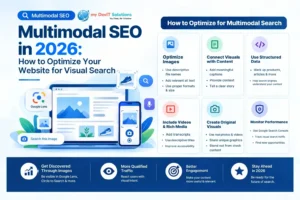
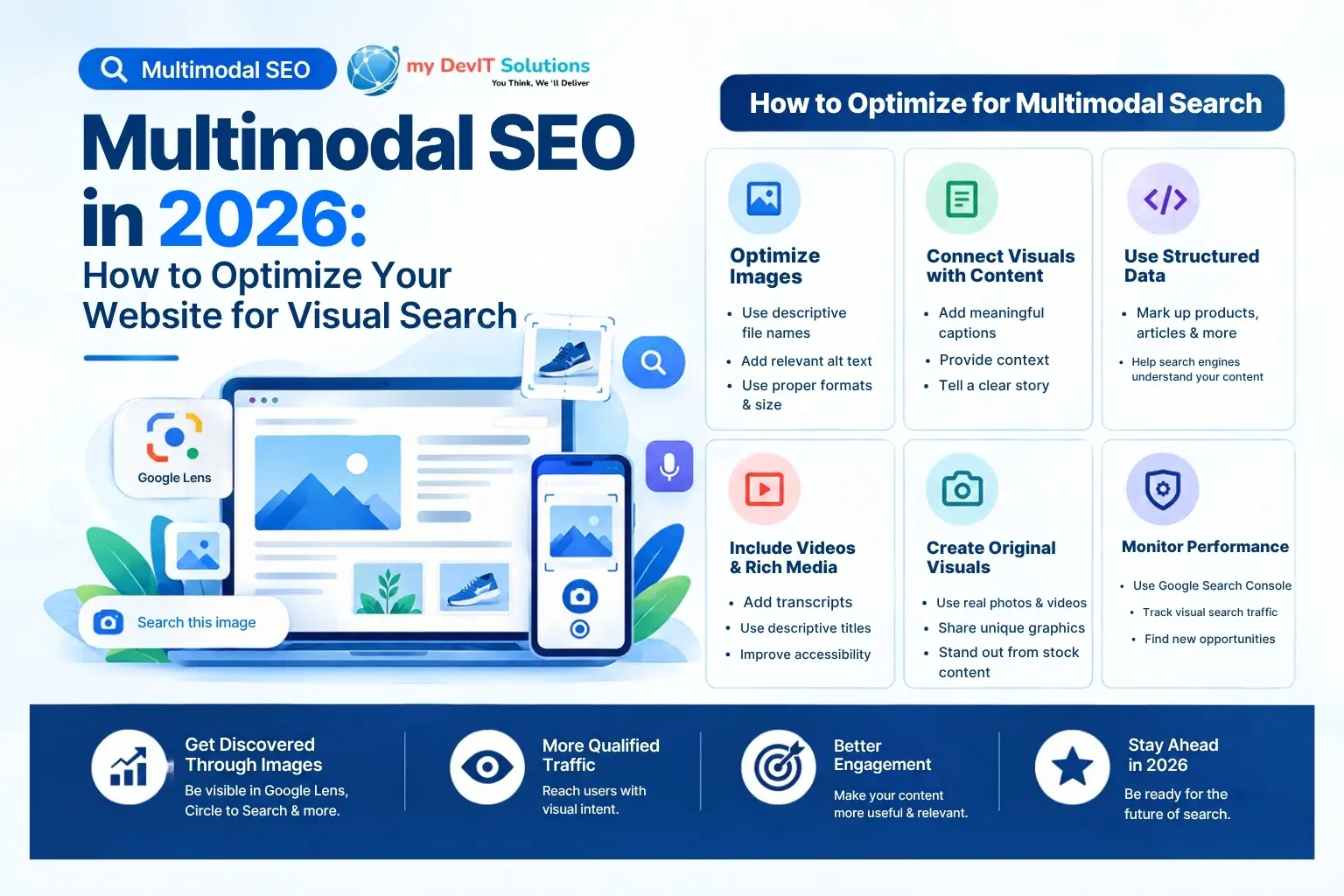
Multimodal SEO: MUM and Gemini’s ability to process text, images, audio, and video means that SEO will extend beyond written content. Optimizing images with detailed alt text, creating video transcripts, and building comprehensive multimedia content hubs will become standard practice.
Answer Engine Optimization (AEO): As AI Overviews grow, SEO will increasingly become AEO — optimizing content to be the source that AI systems cite and summarize. This means extreme clarity, factual accuracy, structured formatting (H2s, H3s, bullet lists, tables), and schema markup.
AI-Generated Content Policies: Google has clarified that AI-generated content is not inherently penalized — what matters is helpfulness and quality. However, Google’s ability to detect low-quality AI content is improving rapidly. The strategic use of AI for research, outlines, and drafts, combined with significant human editing, expertise addition, and original insight, is the winning formula.
Entity-Based SEO: Google’s Knowledge Graph and AI systems increasingly understand the world through entities people, places, organizations, concepts and their relationships. Establishing your brand or author as a recognized entity in Google’s knowledge ecosystem is becoming a core SEO priority.
5. What Is SEO for AI Called? GEO, AEO & the New SEO Terminology
What is SEO for AI called? The industry has coined several terms to describe the evolving practice. “Generative Engine Optimization” (GEO) specifically refers to optimizing content to appear in AI-generated answers from systems like Google’s AI Overviews, ChatGPT, Perplexity, and similar platforms. “Answer Engine Optimization (AEO)” focuses on earning citations in direct answer features. “AI SEO” broadly refers to using artificial intelligence tools and methodologies within traditional SEO workflows.
Regardless of the terminology, the underlying principle remains consistent: create content that is genuinely helpful, demonstrably authoritative, technically sound, and structurally clear. AI systems whether they are ranking algorithms or generative answer engines reward content that serves users exceptionally well.
6. Practical AI SEO Strategies for 2025-2026
Build Topical Authority Clusters: Rather than publishing isolated articles, build interconnected content hubs that cover a topic from every angle. This signals deep expertise to Google’s AI systems and earns higher trust scores.
Implement Structured Data (Schema Markup): Schema markup helps AI systems understand the context and meaning of your content. Article schema, FAQ schema, HowTo schema, and Product schema are particularly valuable for appearing in AI-enhanced search features.
Prioritize Original Research and Data: AI systems value and cite original data, unique insights, and proprietary research. Publishing original surveys, case studies, or industry reports dramatically increases your chances of earning citations in AI Overviews.
Optimize for Conversational Queries: Structure content around specific questions your audience asks. Use FAQ sections, clear H2/H3 question-based headings, and concise, direct answers in the first 1-2 sentences after each heading.
Focus on Core Web Vitals and Page Experience: Google’s page experience signals Largest Contentful Paint, Cumulative Layout Shift, Interaction to Next Paint are evaluated by AI systems as part of the overall quality assessment. A technically excellent, fast-loading website signals trustworthiness.
Establish Author E-E-A-T Profiles: Create detailed author pages with credentials, experience, and links to professional profiles. Google’s AI systems are increasingly evaluating author authority, especially for YMYL (Your Money, Your Life) topics.
Top AI SEO Tools in 2025-2026 — Comparison Guide
| AI SEO Tool | Primary Use Case | Best For | Pricing Tier |
| Surfer SEO | Content optimization & NLP scoring | On-page SEO | $$ |
| SEMrush AI | Keyword research + competitor AI analysis | Full-suite SEO | $$$ |
| Clearscope | Content grading & topic coverage | Content writers | $$ |
| Jasper AI | Long-form AI content generation | Content teams | $$ |
| Alli AI | Automated on-page SEO changes | Enterprise sites | $$$ |
| ChatGPT / Claude | Ideation, drafting, FAQ creation | All marketers | $ / Free |
| Google Search Console | Performance & indexing insights | All websites | Free |
| Frase.io | SERP analysis + AI content briefs | Bloggers & agencies | $$ |
7. How my DevIT Solutions Approaches AI-Driven SEO
Leading digital agencies have had to fundamentally rethink their service offerings in response to AI’s impact on search. my DevIT Solutions, a forward-thinking digital marketing and SEO agency, has built its entire 2025 SEO methodology around AI integration. Their approach combines AI-powered technical audits, human-crafted E-E-A-T content strategies, entity optimization, and schema-first website architecture to help clients not just survive AI-driven search changes, but thrive in them.
From building AI-First Websites for enterprise clients to deploying AI SEO tools for keyword clustering and competitive gap analysis, my DevIT Solutions represents the model of how modern SEO agencies must evolve. For businesses looking for the Best SEO Company in USA, the key differentiator is no longer just technical knowledge it is the ability to seamlessly blend AI capabilities with genuine human expertise, creativity, and strategic thinking.
Conclusion
The question of how SEO is affected by AI has a clear and urgent answer: profoundly, permanently, and in ways that are still unfolding. Google’s AI systems have transformed every dimension of search from how queries are interpreted and results are generated, to how content quality is evaluated and how users interact with search pages.
The SEOs and businesses that will thrive are those who embrace AI as both a challenge and an opportunity. By prioritizing E-E-A-T principles, building genuine topical authority, creating content that serves real human needs, optimizing for AI Overviews and answer engines, and leveraging AI tools intelligently within their workflows, marketers can not just maintain but grow their organic search presence. The future of SEO with AI is not about tricking algorithms it never was. It is about being genuinely the best, most trustworthy, most helpful answer to the questions your audience is asking. Companies like my DevIT Solutions are leading the way in demonstrating that when human expertise meets AI capability, exceptional SEO results follow.
AI has made Google’s ranking algorithms far more sophisticated, rewarding content that demonstrates genuine expertise, helpfulness, and trustworthiness while penalizing thin, keyword-stuffed, or manipulative content
AI shifts keyword research from volume-based to intent-based, enabling SEOs to cluster topics semantically and align content with the full user journey rather than individual keywords.
Businesses use Generative Engine Optimization (GEO) or Answer Engine Optimization (AEO) to optimize their content and increase the chances that AI-powered answer systems, such as Google AI Overviews, will cite their content in generated responses.
No — AI will automate repetitive SEO tasks but increase demand for strategic, creative, and authoritative human expertise that AI cannot replicate.
The future involves multimodal search, personalized AI results, entity-based ranking, and a stronger emphasis on E-E-A-T signals across all content types.