


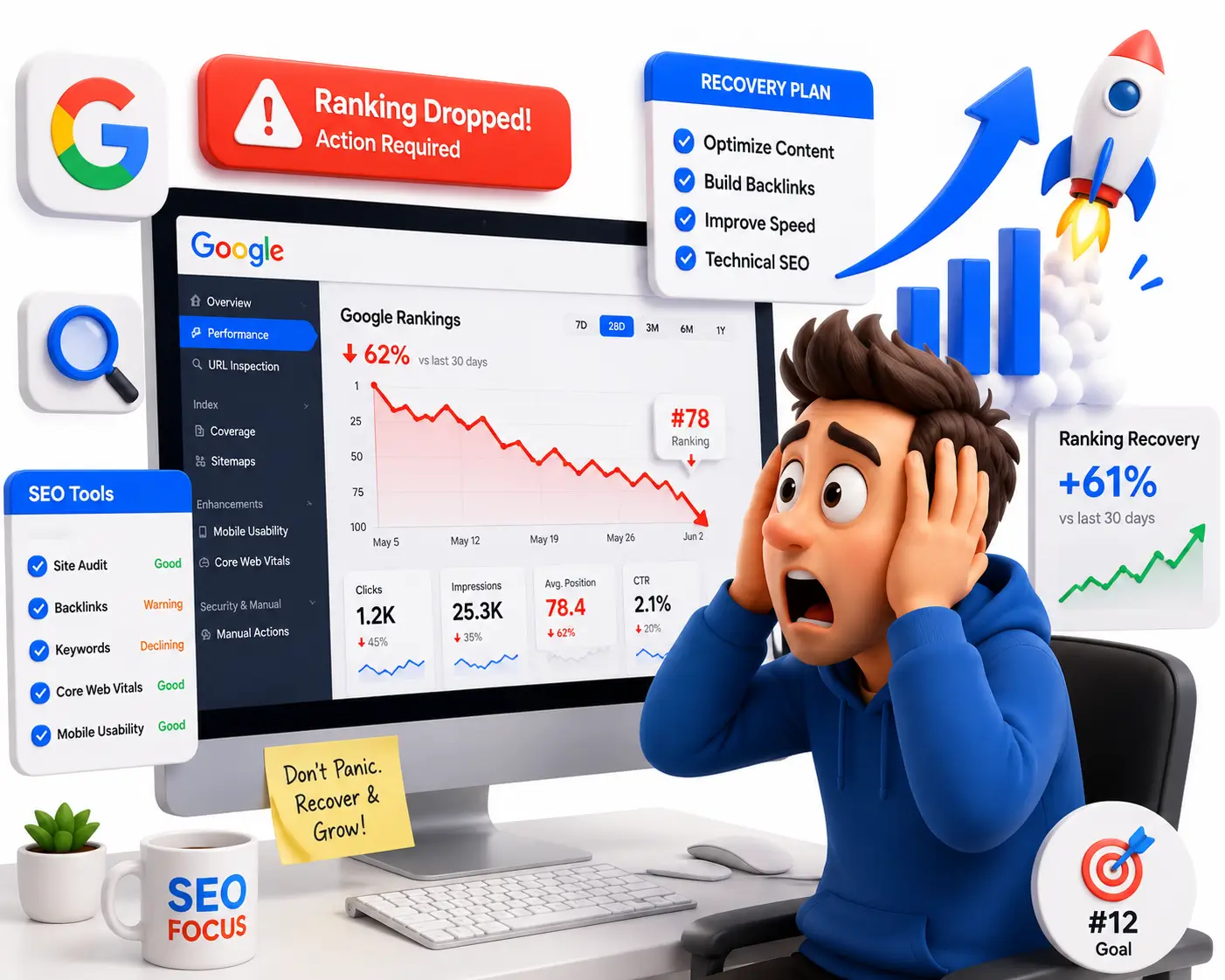
One of the most frustrating situations for any business owner is waking up and noticing that their website traffic has suddenly dropped. In many cases, the problem comes from a decline in Google rankings.
A sudden ranking drop can reduce leads, sales, and visibility almost overnight. The good news is that most SEO ranking issues can be identified and fixed with the right strategy.
In this guide, we’ll explain the most common reasons websites lose rankings in 2026 and how businesses can recover quickly.
1. Google Algorithm Updates
Google constantly updates its search algorithms to improve search quality. Sometimes these updates reward better websites while lowering rankings for outdated or low-quality pages.
If your rankings dropped after a major Google update, it may be because:
- Your content lacks depth
- Your website experience is poor
- Competitors improved their SEO
- Your pages are outdated
How to Fix It
- Update old blog posts
- Improve content quality
- Add expert information
- Improve website speed
- Enhance mobile usability
Websites with valuable, trustworthy, and helpful content usually recover faster.
2. Technical SEO Problems
Technical issues can seriously damage rankings even if your content is good.
Common technical SEO problems include:
- Broken pages (404 errors)
- Missing meta tags
- Slow loading speed
- Indexing issues
- Duplicate content
- Incorrect redirects
Even small technical errors can confuse Google and reduce search visibility.
Quick Recovery Steps
- Run a technical SEO audit
- Fix crawl errors
- Improve Core Web Vitals
- Optimize page speed
- Submit updated sitemap to Google
Technical SEO is often the hidden reason behind sudden ranking losses.
3. Competitors Are Outperforming You
Sometimes rankings drop simply because competitors are publishing better and fresher content.
Businesses investing regularly in SEO, backlinks, user experience, and content marketing usually gain stronger visibility over time.
To Compete Better:
- Publish high-quality blogs regularly
- Improve website design
- Build strong backlinks
- Create more useful content than competitors
- Focus on search intent
SEO is not a one-time task — it requires ongoing improvement.
4. Poor Content Quality
Thin or outdated content no longer performs well in Google search results.
In 2026, Google prioritizes:
- Helpful content
- Real expertise
- User-focused information
- Original insights
- Detailed explanations
Pages written only for keywords without real value often lose rankings.
Improve Content By:
- Adding FAQs
- Updating statistics
- Including visuals
- Expanding explanations
- Solving user problems clearly
The better your content helps users, the better it performs in search.
5. Toxic or Lost Backlinks
Backlinks remain one of Google’s strongest ranking signals.
If your website loses valuable backlinks or gains spammy links, rankings may decline.
Solutions:
- Monitor backlink profile
- Remove harmful links
- Build quality backlinks
- Publish shareable content
- Improve digital PR efforts
Strong backlinks help Google trust your website more.
Final Thoughts
A sudden Google ranking drop does not mean your website is permanently damaged. Most ranking problems can be fixed through proper SEO analysis and consistent optimization.
Businesses that focus on technical SEO, helpful content, website speed, and user experience usually recover faster and gain stronger long-term rankings.
SEO success in 2026 depends on building websites that genuinely help users while maintaining strong technical performance.
If your rankings have dropped recently, now is the perfect time to audit your website and improve your SEO strategy before competitors move ahead even further.