

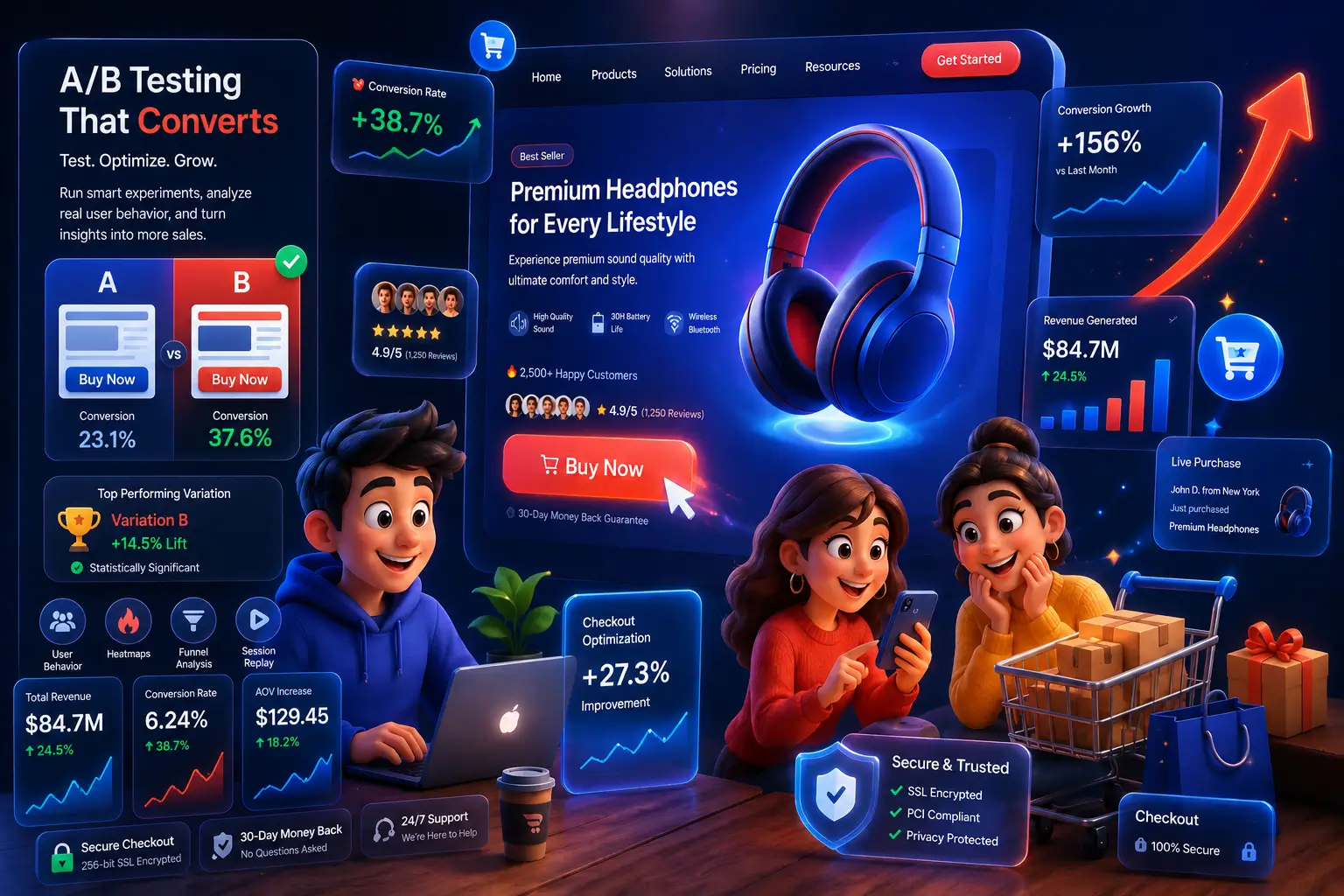
Getting traffic to your website is only half the battle. The real challenge is turning visitors into customers.
Many businesses spend heavily on ads, SEO, and social media campaigns but still struggle with low conversion rates. In most cases, the problem isn’t the product or service — it’s the website experience.
A well-designed website guides users naturally toward action. Whether it’s making a purchase, booking a call, or filling out a form, smart UX and UI decisions can dramatically improve conversions.
Here are three powerful website design secrets that can help increase engagement and boost sales.
1. Optimize the First and Last Step of the User Journey
The beginning and end of a customer’s journey are the most important moments on your website.
If visitors don’t immediately understand your offer, they leave. And if the checkout or contact process feels complicated, they abandon the journey before converting.
Improve Your Landing Pages
Your landing page should instantly communicate:
- What you offer
- Who it’s for
- Why it matters
Strong landing pages focus on a specific audience instead of trying to appeal to everyone.
What Makes a High-Converting Landing Page?
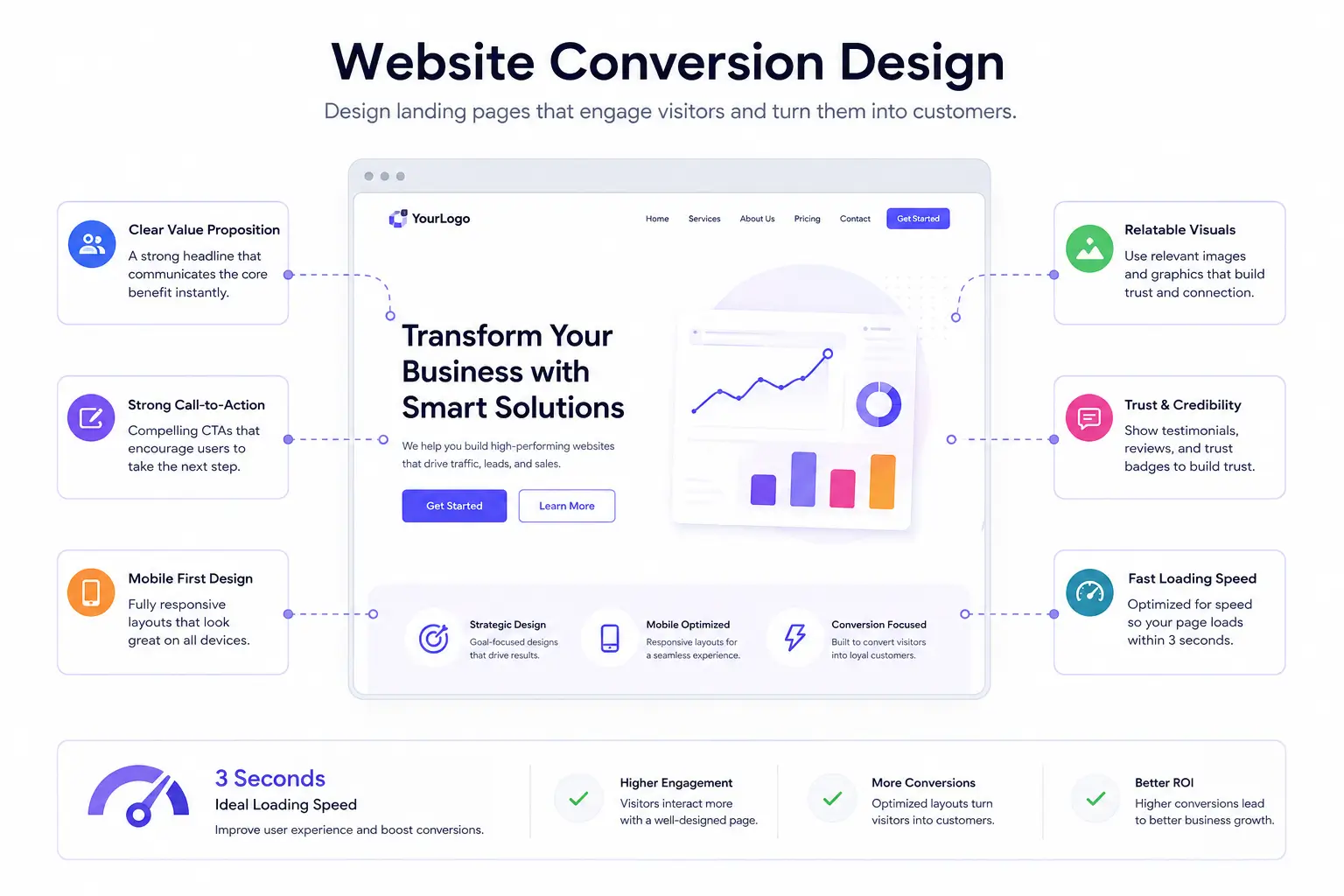
- Clear headline with a strong value proposition
- Fast loading speed
- Personalized messaging
- Simple layout with minimal distractions
- Call-to-action visible above the fold
- Realistic and relatable visuals
For example, if you’re targeting fitness enthusiasts, your visuals and messaging should reflect their goals and lifestyle.
The more relevant your page feels, the higher the conversion rate.
Simplify the Checkout or Contact Process
A confusing checkout page is one of the biggest reasons users abandon purchases.
To improve conversions:
- Reduce unnecessary form fields
- Offer multiple payment methods
- Display trust badges and security icons
- Show a progress indicator
- Use clear CTA buttons
- Keep the process mobile-friendly
People want speed and simplicity. Every extra step creates friction.
2. Build Trust With Social Proof
Users trust other users more than brands.
That’s why social proof plays a major role in conversion-focused web design.
When visitors see positive feedback from real customers, they feel more confident taking action.
Effective Types of Social Proof
Customer Reviews
Show authentic reviews with names and photos whenever possible.
Testimonials
Highlight transformation stories and measurable results.
Ratings
Display star ratings clearly near products or services.
Case Studies
Show how your service solved a real problem.
Client Logos
Featuring recognizable brands instantly increases credibility.
Why Social Proof Works
People naturally look for reassurance before making decisions online.
Trust signals reduce hesitation and help users feel safe.
Even simple additions like:
- “Trusted by 5,000+ customers”
- “Rated 4.9/5”
- “Featured in…”
can significantly improve conversion rates.
3. Remove Friction From the User Experience
Good design isn’t just about appearance. It’s about usability.
Visitors should never feel confused while navigating your website.
The smoother the experience, the more likely users are to convert.
Common UX Mistakes That Hurt Conversions
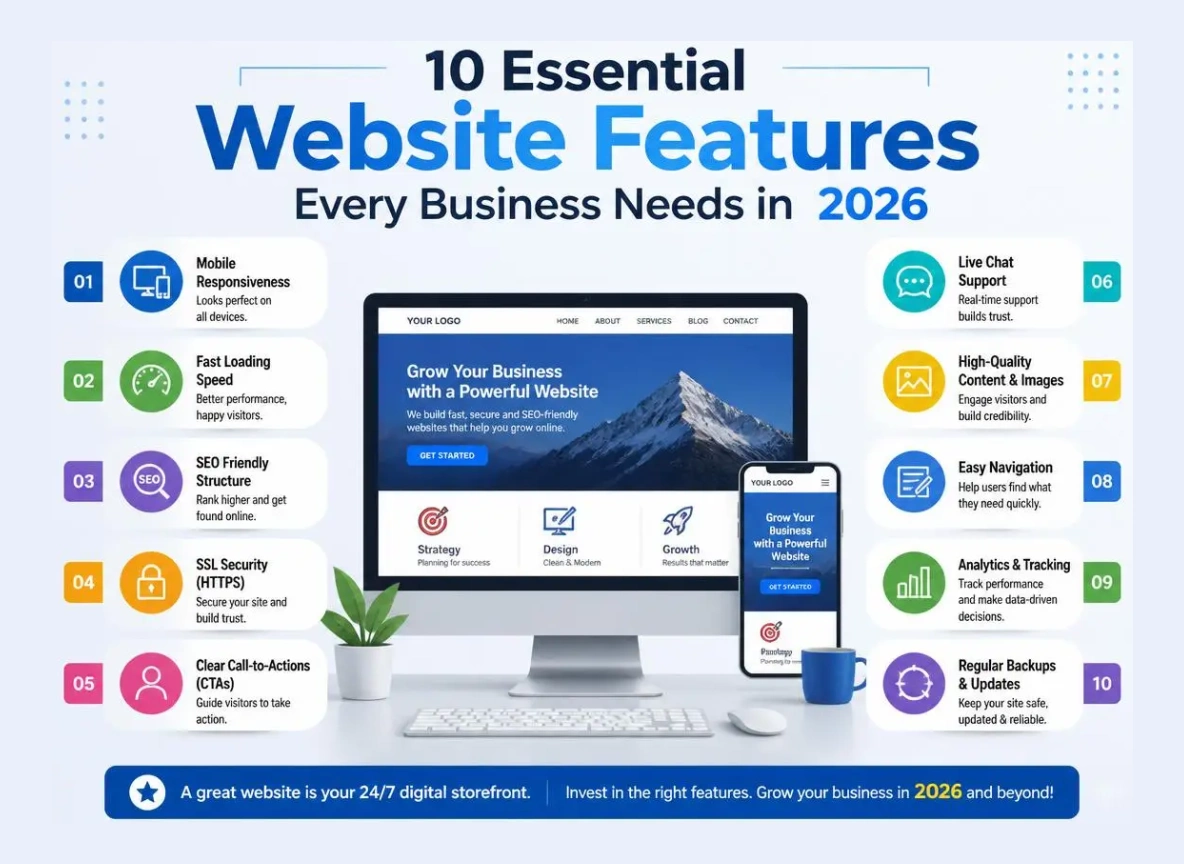
- Slow-loading pages
- Cluttered layouts
- Poor mobile responsiveness
- Hard-to-read text
- Too many popups
- Hidden navigation
- Weak call-to-action buttons
Every obstacle increases the chance of users leaving your site.
Create a Smooth User Experience
To improve website performance:
Use Clear Navigation
Make it easy for users to find information quickly.
Focus on Mobile Design
Most traffic now comes from mobile devices.
Keep CTAs Consistent
Use action-driven buttons like:
- Get Started
- Book a Free Call
- Download Now
Improve Visual Hierarchy
Guide attention using spacing, contrast, and typography.
Reduce Cognitive Load
Simplify layouts and avoid overwhelming users with too much information.
Final Thoughts
A high-converting website isn’t built by accident.
Small design improvements can create major increases in leads, sales, and customer engagement.
By focusing on:
- Strong landing pages
- Trust-building elements
- Frictionless user experiences
you can turn more visitors into loyal customers.
Modern users expect fast, intuitive, and trustworthy websites. Businesses that prioritize conversion-focused design gain a major competitive advantage.
If your website is attracting traffic but not generating enough conversions, it may be time to rethink the user experience.